A wireless temperature monitoring system combines sensors, a compatible data collector and reporting software. Together, these components help teams record storage conditions, review temperature history and investigate readings outside the defined limits.
SensMax SensGuard offers equipment for monitoring temperatures in storage areas, retail premises and temperature-controlled spaces. The sensors, probes and connectivity required depend on the application and operating conditions.
This guide explains the role of each component and the main points to check when planning an installation.

Applications
Cooling & Freezing: Refrigerators and freezers • Fridge drawers • Ice machines • Cold rooms
Heating: Heated display cabinets • Cooktops • Grills
Why Automated Monitoring Matters
Temperature deviations can affect stored goods and daily operations. Historical readings help staff investigate incidents and review equipment performance.
Define permitted limits for each monitoring point. Confirm available alert delays and defrost settings for the selected software, and assign responsibility for responding to notifications.
Automated records can reduce routine transcription and support internal checks. Confirm available notification channels, scheduled reports and export formats for the selected software. Monitoring should complement the site’s documented checks, calibration and response procedures.
Key Benefits
- Investigate Equipment Performance: Review temperature trends to support investigation of possible equipment problems.
- Reduce Routine Administration: Use recorded measurements to reduce manual data entry while retaining required checks and verification.
- Support Documentation: Temperature records can support internal checks and audit preparation. The system alone does not guarantee regulatory compliance.
How It Works
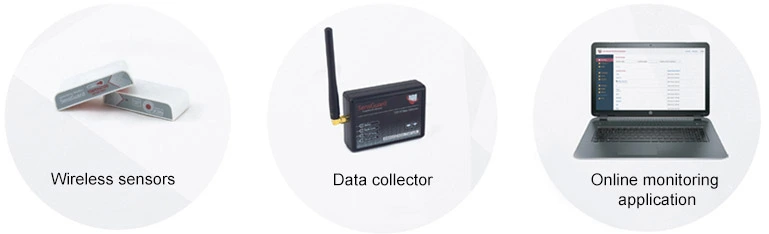
The SensGuard remote temperature monitoring system consists of three main components: wireless temperature sensors, a temperature data collector, and an online monitoring platform.
Wireless Temperature Sensors: Select the measurement range, accuracy and probe type for each application. Battery life and measurement intervals depend on the model, configuration and operating conditions. Confirm calibration documentation where required.
Temperature Data Collector: Receives measurements from compatible sensors and transfers data to the reporting system. Capacity, network connection and radio range depend on the collector model. Test coverage with walls, racks and stored goods in place.
Dual Measurement Modes
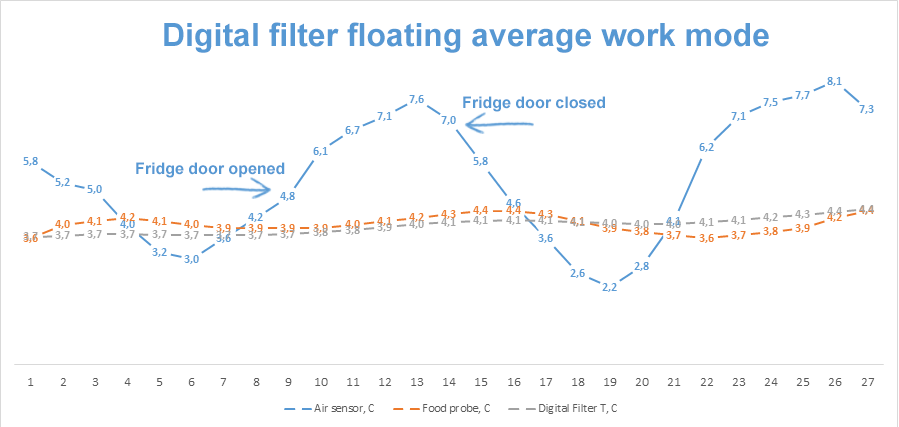
Freezing equipment in grocery stores and supermarkets experiences frequent use. Interior air temperature can rise rapidly due to warm airflow when doors are opened, even though product temperature changes much more slowly. To address this, the system allows you to switch between two measurement modes:
Unfiltered Temperature Readings: Review measured conditions without smoothing. Select the measurement method and permitted limits according to the stored products and the site’s procedures.
Moving Average Filter: Where supported, filtering can smooth short-term fluctuations in displayed air temperature readings. Filtered air readings do not directly measure product temperature. Configure filtering and alerts so that significant deviations remain visible.
The data collector sends readings to the online monitoring platform for display in reports and charts. Depending on the software and configuration, you can set minimum and maximum thresholds, configure defrost detection and manage user access, reports and alerts across locations.
Software Features
The remote temperature monitoring software is a cloud-based reporting application with a multi-user interface. You can view statistical reports per sensor, by group, or for an entire facility.
Individual Configurations: Each sensor can have custom min/max parameters, defrost detection algorithms, and fault detection settings.
Interactive Floor Maps: For ease of use, sensors can be placed on an interactive layout map of the premises to locate issues instantly.
Photo Documentation: You can upload a photo showing the sensor's mounting position, which is extremely helpful for maintenance and service teams.

Alarm Notification Tiers
You can customize alarm settings for each user and select specific alert types:
⚪ White Alarm: Standard notification for short-term temperature deviations.
🟡 Yellow Alarm: Alert for sustained, long-term temperature deviations.
🔴 Red Alarm: Critical alert for long-term temperature deviations occurring across multiple sensors simultaneously.
Send your enquiry through the contact form
Request Technical Advice
For more information, a quotation or technical support, please use our contact form.
info@orisiz.com
+40 314 32 00 35
Romania, Bucharest, District 1
Choose Your Temperature Monitoring Equipment
For a complete setup, explore our temperature and humidity monitoring systems. Then compare temperature and humidity sensors by measurement range, accuracy and whether a separate probe is needed.
Ask for advice on your monitoring points, including operating temperatures, the number of monitoring points and required alerts.