Temperature Monitoring Systems
The SensMax SensGuard remote temperature monitoring system enables automated temperature tracking across a network of retail stores or supermarkets. You can install wireless temperature sensors on any freezing, cooling, or heating equipment. The wireless monitoring sensors support a temperature control range from -100°C to +250°C.

Applications
Cooling & Freezing: Refrigerators and freezers • Fridge drawers • Ice machines • Cold rooms
Heating: Hot showcases • Stovetops / Cooktops • Grills
Why Automated Monitoring Matters
Spoiled products, regulatory non-compliance, and equipment failure typically damage a company’s reputation and can directly impact revenue.
The temperature monitoring system operates in real time, allowing you to detect issues at an early stage. You can configure custom permitted temperature ranges for each wireless sensor, as well as define a defrost algorithm for freezing equipment to filter out normal temperature spikes during defrost cycles.
Automated reporting eliminates manual temperature readings, reduces human error, and saves labor resources. You can receive email or SMS alerts when temperatures fall outside the set range and schedule automated summary reports for designated personnel. Additionally, all reports can be printed for regulatory compliance or food safety inspections.
Key Benefits
📉 Minimize Product Spoilage: Get real-time notifications whenever temperatures exceed permitted parameters.
🛡️ Strengthen Brand Image: Consistently offer customers the freshest, highest-quality products to maintain your market reputation.
🔮 Preventive Maintenance: Identify refrigerator issues before complete equipment failure occurs.
⏳ Save Resources: The system is fully automated, eliminating the need for manual temperature checks.
📋 Ensure Regulatory Compliance: Automated tracking helps maintain continuous adherence to current industry standards.
How It Works
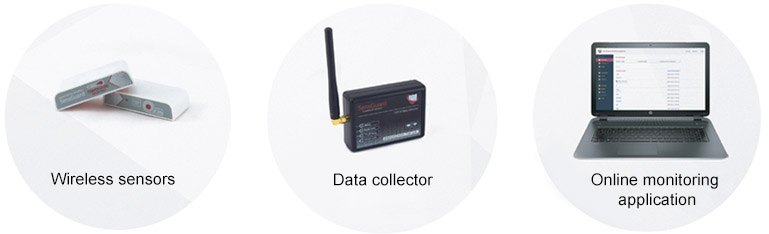
The SensGuard remote temperature monitoring system consists of three main components: wireless temperature sensors, a temperature data collector, and an online monitoring platform.
Wireless Temperature Sensors: Feature a guaranteed battery life of over 5 years and log temperature readings every 5 minutes. All sensors are certified with a reading accuracy within 0.5°C.
Temperature Data Collector: Receives statistics from the sensors and transmits data to a central database via LAN or the Internet. A single data collector can service up to 200 sensors within a 150m radius (or up to 500m using signal repeaters).
Dual Measurement Modes
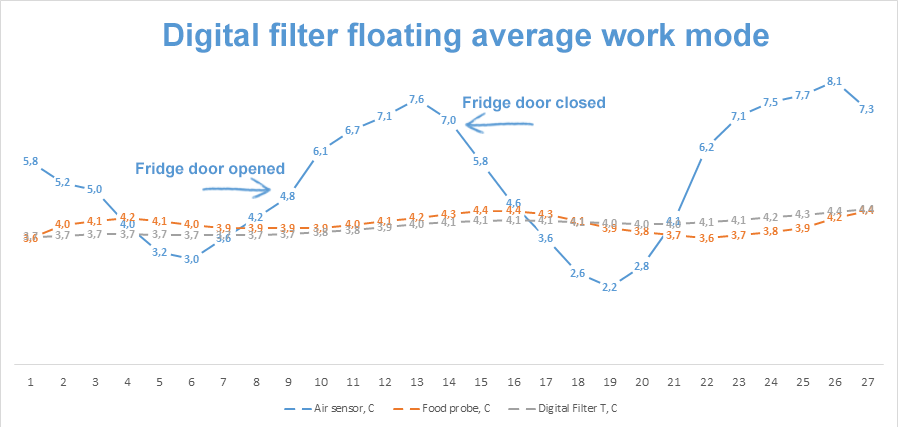
Freezing equipment in grocery stores and supermarkets experiences frequent use. Interior air temperature can rise rapidly due to warm airflow when doors are opened, even though product temperature changes much more slowly. To address this, the system allows you to switch between two measurement modes:
Exact Temperature Measurement Mode: Designed for highly sensitive environments (such as pharmaceutical storage) where air temperature must remain strictly stable at all times.
Moving Average Digital Filter Mode: Designed for standard environments (such as supermarket display fridges). This mode filters out short-term warm air spikes caused by open doors, focusing instead on the actual temperature of the stored food products.
The data collector automatically forwards all information to the online monitoring system, where it is displayed via various reports and graphs. You can set individual min/max thresholds for each sensor, define defrost detection algorithms, and establish multi-level user access rights with personalized reporting and alert configurations across an entire store network.
Software Features
The remote temperature monitoring software is a cloud-based reporting application with a multi-user interface. You can view statistical reports per sensor, by group, or for an entire facility.
Individual Configurations: Each sensor can have custom min/max parameters, defrost detection algorithms, and fault detection settings.
Interactive Floor Maps: For ease of use, sensors can be placed on an interactive layout map of the premises to locate issues instantly.
Photo Documentation: You can upload an exact photo of the sensor's physical installation, which is extremely helpful for maintenance and service teams.

Alarm Notification Tiers
You can customize alarm settings for each user and select specific alert types:
⚪ White Alarm: Standard notification for short-term temperature deviations.
🟡 Yellow Alarm: Alert for sustained, long-term temperature deviations.
🔴 Red Alarm: Critical alert for long-term temperature deviations occurring across multiple sensors simultaneously.
Contact Us for more details!
For further information, a quote, or troubleshooting requests, please send us an email using the contact form on our website!
+40 314 32 00 35
Romania, Bucharest, District 1